
Our Curriculum
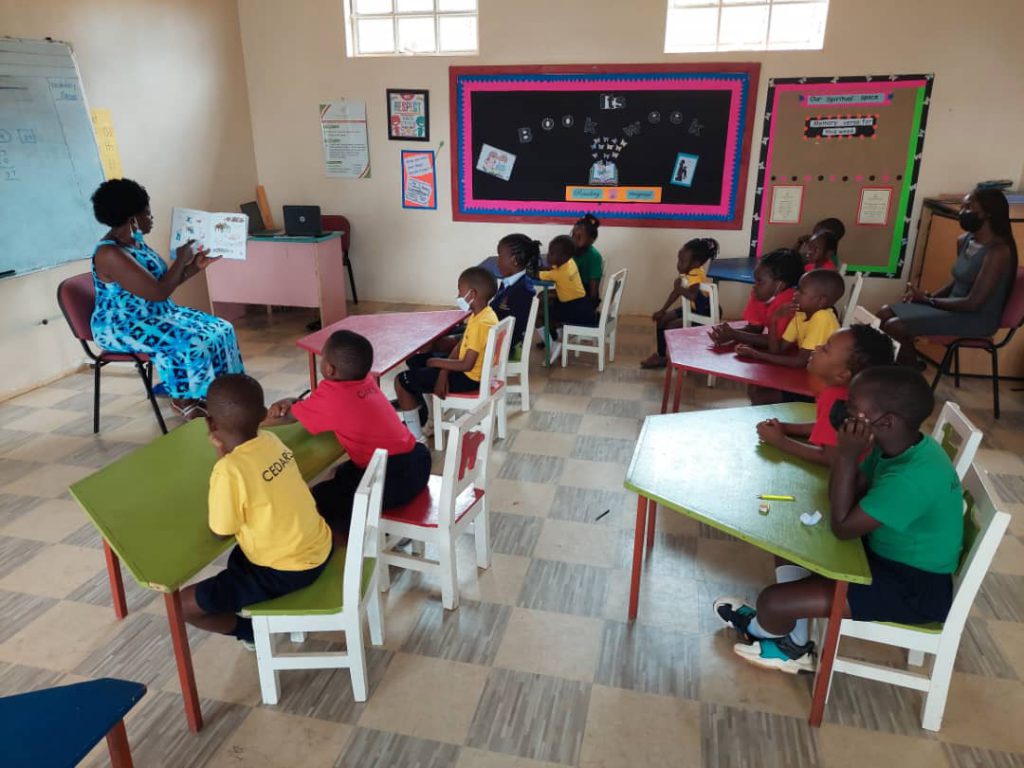
Marigolds Christian School is offers Early Years Education(3-5yrs) and Elementary School (5-11yrs) using the Cambridge curriculum.
What is the Cambridge Curriculum?
The Cambridge International Curriculum was introduced by Cambridge Assessment International Education, a globally recognised provider of international qualifications. This curriculum shapes an individual’s education from age five to 19 and allows them to focus on subjects based on their strengths and interests. Cambridge International is part of the world-renowned University of Cambridge. Over 10,000 schools in 160 countries offer Cambridge programmes and qualifications.
What subjects are covered?
The Cambridge Primary programme develops skills and understanding in ten subjects, including English, mathematics and science, and includes assessment that proves and improves learning.
For Cambridge Lower Secondary, students are taught core subjects such as English as a first or second language, mathematics, science, Cambridge Global Perspectives and ICT Starters. Students can also dabble in newly added subjects – Art & Design, Digital Literacy, Music and Physical Education.
Structure & Format
The curriculum’s structure is known as the Cambridge Pathway and consists of Cambridge Primary (5 to 11 years old)
What is the aim of the curriculum?
The Cambridge Pathway gives students a clear path for educational success from age five to 19. The four stages of the Cambridge Pathway lead seamlessly from primary to secondary and pre-university years. Each stage builds on the learners’ development from the previous one, but can also be offered separately. This flexibility means that students can hop on and off at any point along the way.
The flexibility and international nature of the Cambridge International curriculum also means that students can begin their studies in one country and complete them in another. What is taught in the classroom won’t be exactly the same in each country – as schools have freedom to tailor the course content to suit their students’ local needs and contexts – but the syllabus aims and assessment objectives are the same worldwide.
How is the grading system and requirements for graduation?
Students’ academic progress are assessed through Checkpoints at the end of Cambridge Primary and Cambridge Lower Secondary. Both Cambridge Primary Checkpoint and Cambridge Lower Secondary Checkpoint assess students’ proficiency and ability in English, English as a second language, mathematics and science. These checkpoints provide teachers with an international benchmark to measure their students’ progress and tailor individual learning programmes. Furthermore, a feedback report is created based on each student’s results which enables detailed and structured reporting to their parents.
Benefits/Advantages of the Cambridge curriculum
Five elements define the Cambridge education which are international curriculum, teaching, learning, assessment and international recognition. Its international curriculum is constantly updated through expert international school research and consultation with schools. In terms of teaching and learning, teachers are expected to guide their students to become confident, engaged and independent learners. Next, assessment in the Cambridge International Curriculum is fair, valid and reliable. In addition, Cambridge qualifications are internationally recognised by higher education institutions all over the world.